

March 11, 2026
A running toilet is frustrating. From the constant hissing or trickling background noise to the annoyance of not knowing why or what to do, it can certainly work on your nerves. Fortunately, there are easy ways to identify the cause of the running and fix it yourself or hire a plumber.
In this guide, we’ll help you understand toilet mechanics, how to identify, troubleshoot and fix the cause of the running, and when to call a professional plumber for assistance. Fixing a running toilet is much easier than you think.
Understand the Toilet’s Anatomy
To fix a toilet that keeps running, you need to understand the different parts within the tank. This helps you learn about how a toilet works while also giving you confidence to identify the problem and decide on the best course of action.
The different parts of the toilet include:
- The toilet tank or cistern: The tank holds the water used for flushing and the other plumbing parts.
- The fill valve and tube: Connected to the water supply line, the fill valve and tube refill the tank with water after flushing and control the water level in the tank with a float.
- The flush valve: This is the drainage point at the bottom of the tank, where water flows out and into the bowl when the toilet is flushed. This part is covered by the flapper.
- The flapper: Described as a “plug,” the flapper seals the flush valve to stop water from escaping between flushes. It’s connected to the toilet lever, which, when pushed, lifts the flapper and flush valve to let the water drain into the bowl.
- The overflow tube: A safety feature that ensures your tank doesn’t overflow if the fill valve fails. It drains excess water into the bowl.
With the basics of toilet parts covered, let’s learn how to fix a leaking toilet.
Identify the Cause
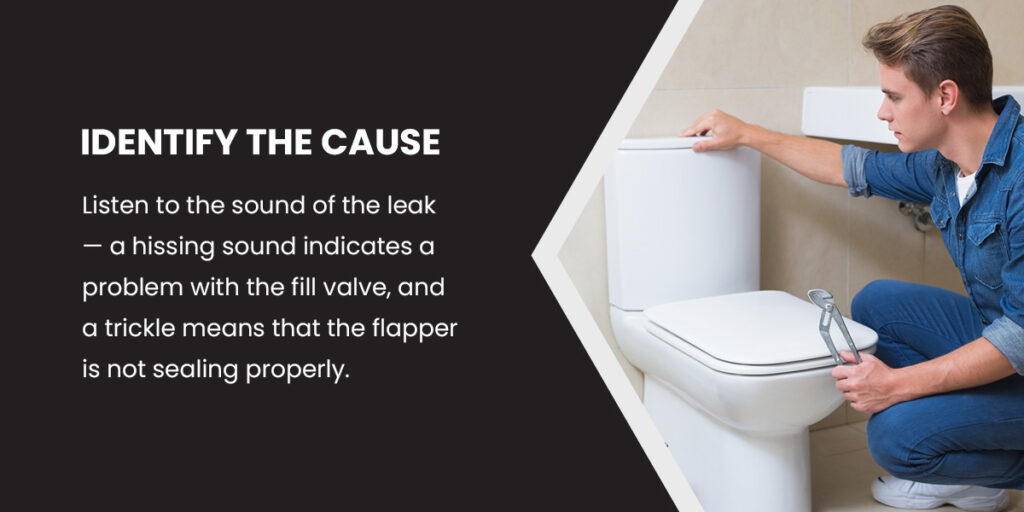
To understand why your toilet is running, there are several methods you can try to identify the issue. First, however, you want to observe. Listen to the sound of the leak — a hissing sound indicates a problem with the fill valve, and a trickle means that the flapper is not sealing properly. Alternatively, you can do a dye test. Add a few drops of food coloring to the tank water and don’t flush. If the coloring appears in the bowl after a few minutes, it indicates that the flapper is not sealing properly.
Ensure you inspect all parts of the toilet tank. Sometimes the issue with a toilet that keeps running is as simple as spotting dirt or corroded parts, chain tension problems or the float being stuck under a tube.
Troubleshoot the Fill Valve
If the cause of a running toilet is the fill valve, troubleshooting is necessary.
There are a couple of common issues that you can test:
- Constant running: If the valve continuously refills the tank with water, causing overflow, there might be sediment buildup. Flush the float downwards while the water is running to flush it out.
- Slow fill: The water tank is not filling or is filling slowly, even with the water supply open. Again, there could be a buildup of dirt blocking the valve. Close the water supply, remove the top valve top cap, then reopen the water slowly with a cup covering the valve to flush it.
- Noisy valve: This happens due to high water pressure or a broken seal. Clean the seal, then refill the tank and test again.
If none of these solutions fix the issue, it might be time to replace the fill valve.
Inspect the Flapper
The flapper is the common culprit of toilet leaks. The trickling sound is the sign of a flapper that’s not sealing properly and allowing water to escape from the tank. To pinpoint the flapper as the issue, open the toilet tank and, with your hand, push down on the flapper. If the trickling stops, it means your flapper is not sealing.
To troubleshoot the flapper, you can do the following:
- Clean the flapper: Close the water supply, flush the toilet to empty the tank, then clean the underside of the flapper and valve seat to remove sediment buildup.
- Check the chain tension: The chain connecting the flapper to the toilet lever may be too short, preventing the flapper from closing and sealing properly. Or too long and has gotten caught under the flapper. Adjust the chain length if necessary. There needs to be a 1/4 to 1/2 inch slack in the chain.
- Inspect the flapper’s condition: If the flapper is more than five years old, and feels brittle and out of shape, it needs to be replaced.
What Happens if I Don’t Fix a Running Toilet?
Failing to fix a running toilet can have serious consequences that affect your wallet, home and health.
Not repairing this issue can:
- Increase water bills: The average home with an older toilet model uses about six gallons per flush. A toilet leak can cause you to use more water than necessary, significantly increasing your water bill.
- Cause mold and mildew growth: Damp areas that aren’t treated can lead to mold and mildew growth. This can be detrimental to your health and result in significant medical expenses.
- Lead to structural damage: Water leakage around the base or from the tank can cause rotten flooring and damage to walls.
When to Call a Plumber
If you have completed all the testing and inspecting and are still experiencing issues with a running toilet, consider calling a plumber. There may be underlying issues that need professional attention.
Contact a plumber if:
- You notice structural damage: If the tank or bowl has cracks, leakage around the base of the toilet or weakened joints, this can affect water retention and lead to further issues in the long run.
- The running persists after repairs: If you have replaced the flapper and fill valve but the running persists, a plumber may need to do a thorough inspection. This can indicate more complicated issues with internal channels and valve assemblies.
- Your toilet has a complex mechanism: Dual-flush and integrated valve systems require specialized repairs to prevent damage to the mechanism.
- There’s corrosion or limited access: Tight fittings, rust or difficult mounting points may prevent you from fixing the toilet yourself. Plumbers will have the essential tools to sort out the problem.
Contact Enduric Plumbing if Your Toilet Is Always Running
Running and leaking toilets can be prevented. With occasional mechanism inspections and replacements, you can keep your toilet functioning in top shape. But if you need help, a plumber can fix a running toilet for you.
At Enduric Plumbing Services Inc, we’re licensed, insured and experienced in offering full-service plumbing solutions to both residential areas and commercial buildings.
Don’t hesitate to contact us if you need help with a toilet that keeps running after a flush.