

October 14, 2026
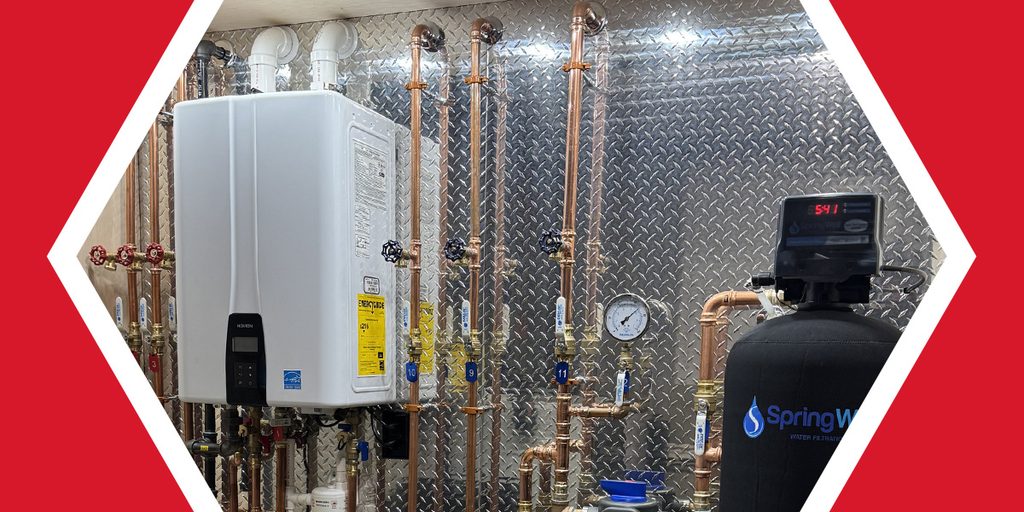
Your old, bulky water heater consumes energy around the clock and takes up space. A tankless model heats water only when you need it. These compact units can lower your utility costs and free up room for other uses.
These systems have many benefits, but are they right for your property? This tankless water heater buying guide walks through their mechanics, pros, cons and other key factors so you can make an informed decision.
What Is a Tankless Water Heater?
A tankless water heater heats water on demand rather than keeping water warm in a storage tank. The units are so compact that you can install them on a wall or inside a closet. Tankless systems run on either electricity or gas. A single unit can meet hot water demands for your entire household, as long as you choose the right size and capacity.
How Does a Tankless Water Heater Work?
Tankless water heaters heat water as it flows, unlike conventional systems that store a large volume of hot water.
Here’s how a tankless water heater works step-by-step:
- Activation: You turn on a hot water faucet or start an appliance like a washing machine or dishwasher.
- Flow detection: A flow sensor inside the unit detects the moving water and activates the heating elements or gas burners.
- Instant heating: Cold water travels through a pipe and wraps around a heat exchanger. The exchanger raises the water to your set temperature.
- Continuous delivery: Heated water flows to the open fixture. Since there’s no storage tank to restrict supply, the unit provides near-endless hot water.
- Shut off: When you turn off the faucet, water flow stops. The sensors detect this change and turn off the burners or heating elements to stop the unit from using energy.
- Venting (gas units only): Gases produced by the combustion process vent outside your home. Condensing water heaters release the gases only once they cool and the unit has reclaimed heat energy.
This on-demand approach means you only heat water when you actually use it.
What Are Tankless Water Heater Pros and Cons?
When you consider whether a tankless system fits your home, weigh the benefits against the potential drawbacks:
Advantages of Tankless Water Heaters
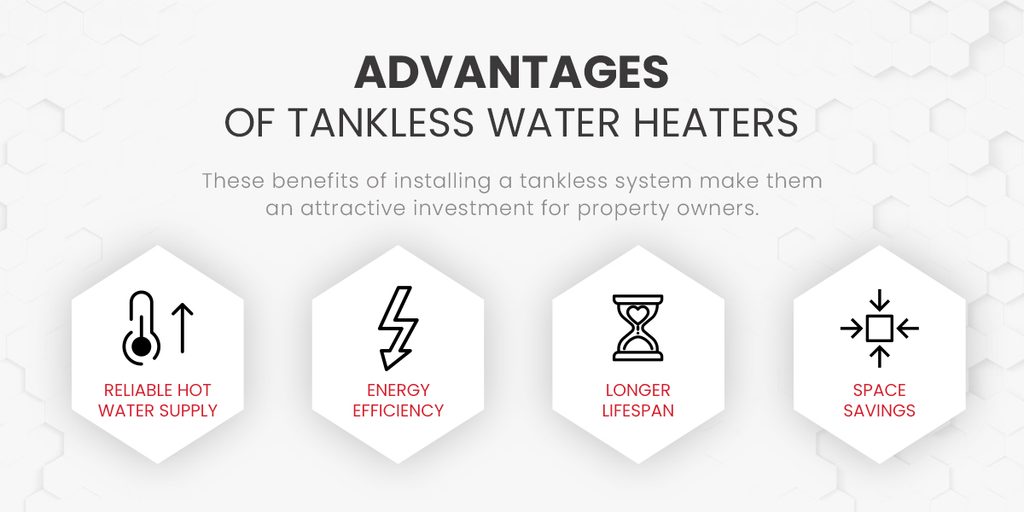
These benefits of installing a tankless system make them an attractive investment for property owners.
- Reliable hot water supply: Traditional tanks can deplete after filling a bathtub or taking a long shower. Tankless models heat water on the go. That means with the proper size and flow rate, you could have an endless supply of hot water.
- Enhanced energy efficiency: Traditional tanks reheat the same reservoir of water. Tankless systems only fire up when you turn on the hot tap, which can reduce your energy usage and lower your costs. An ENERGY STAR gas tankless water heater can save around $300 on gas bills over its lifetime compared to a conventional gas tankless model.
- Longer lifespan: With proper maintenance, tankless heaters can last 20 years or more, while tank models have a 10- to 15-year lifespan.
- Space savings: Standard 40- to 50-gallon tank heaters take up a significant amount of space. Most tankless units are the size of a small carry-on suitcase and mount to the wall, reclaiming your closet or utility room floor.
These advantages make tankless heaters appealing for many homes, but they come with trade-offs worth considering.
Drawbacks of Tankless Water Heaters
Before you commit to a tankless system, consider these potential disadvantages:
- Higher up-front cost: You pay more for the device and installation than for a traditional water heater. Over time, energy savings can offset this initial investment.
- Flow rate limitations: Using many hot water fixtures in a large home at the same time may exceed the capacity of a single device. Running a shower, a dishwasher and a washing machine at once could strain the system. Some households install multiple units to handle peak demand.
- Maintenance required: Like any water heater, tankless models need routine maintenance to perform their best. Tasks like flushing and replacing water filters ensure a reliable supply of hot water.
- Power dependent: Electric units require a dedicated circuit. Gas-powered versions must have access to a propane or natural gas line. Your home may need electrical or plumbing upgrades before installation.
Knowing these limitations helps you set realistic expectations and plan for your household’s needs.
What Size Tankless Water Heater Do You Need?
To choose the proper tankless water heater size, follow these steps:
1. Calculate Maximum Flow Rate
Measured in gallons per minute (GPM), flow rate determines how much hot water your system must supply at once. Tankless water heaters deliver 7 to 12 GPM based on the model. Units with higher GPMs deliver more hot water. Use the number of fixtures and appliances you run at the same time and find out each one’s flow rate.
For example, you might run a shower (3 GPM), washing machine (5 GPM) and dishwasher (3 GPM) at the same time. Your water heater would need to handle a maximum flow rate of 11 GPM. A licensed plumber can assess your household and provide a more precise calculation.
2. Determine Temperature Rise
After working out the flow rate, turn your attention to the temperature rise. Temperature rise is the difference between your desired hot water temperature and the incoming groundwater temperature. A larger rise needs a water heater with a higher GPM. If your target temperature is 120°F and the incoming water temperature is 50°F, the temperature rise is 70°F (120°F – 50°F = 70°F).
Flow rate matters here. The unit must be able to deliver the required GPM at the needed temperature rise. Colder inlet water in winter means your water heater needs to achieve a higher temperature rise. Perform the calculation on the coldest day of the year to choose a unit that can handle your household’s demand in the chilly season.
Compare the flow rate and temperature rise to the outputs of tankless water heater models to find the perfect fit.
How Much Is a Tankless Water Heater?
Price varies by fuel type, system capacity, labor and upgrades like electrical or gas line modifications. Homes with higher demand may need more than one unit to run multiple fixtures. Condensing and non-condensing gas models also differ in price. Depending on which fuel source you choose, electricity or gas prices can impact the long-term operating expenses.
Speak to trusted local plumbers to get an accurate reflection of the total cost.
Why Hire a Professional Plumber to Install Your Tankless Water Heater?
Partnering with a reputable plumber for tankless water heater installation offers these benefits:
- Expert recommendations: A professional can advise whether a tankless model suits your specific needs. They evaluate your current setup, hot water usage and budget to recommend the best option.
- Proper sizing and efficiency: Proper sizing is crucial to ensure your water heater can keep up with your household’s needs. Plumbers calculate hot water demand, optimize flow rate and can even install water softeners to extend your unit’s lifespan.
- Code compliance and permits: Licensed installation ensures your work meets local building codes. Local plumbers know whether your state or municipality requires permits for water heater installations.
- Gas line competence: For gas water heaters, you need technicians with expertise in gas line work for safety and peace of mind.
- Warranty protection: Most manufacturers’ warranty coverage demands installation by a certified professional.
Professional installation gives you confidence that your new heater will perform as expected for years to come.
Get Expert Recommendations and Tankless Water Heater Installation
A tankless water heater is an investment in efficiency, reliability and comfort. Professional installation from Enduric Plumbing helps you get the most value from that investment. As a full-service residential and commercial plumbing company in North Carolina, we’re a trusted guide in tankless water heater services.
Our licensed, experienced team gives honest advice. They inspect your property, understand your hot water usage and recommend which water heater will work best. Every installation comes with strong warranties for your peace of mind. We provide up-front pricing before work begins and ensure clean, quality workmanship.
Take the first step toward lower energy costs today. Call us or reach out online to schedule an appointment.