

July 20, 2026
Few things are more frustrating than finishing your shower in an ankle-deep pool of water that refuses to drain. This minor annoyance can quickly escalate into a serious plumbing problem. Our guide covers the most common causes of bathtub and shower drain problems, safe DIY solutions you can try and how to recognize when it’s time to call in a professional.
Hair and Soap Scum Buildup
Hair and soap scum are frequent culprits behind slow-draining showers and tubs. When you shower, loose hair washes down the drain, creating a tangled net that catches other debris. Soap scum is a binding agent that clings to the hair, gradually forming a dense, stubborn blockage.
In hard water areas, mineral deposits in the water create a rough, chalky surface in pipes, which allows hair and soap scum to grip more easily and form clogs faster.
While pulling out surface-level hair clogs may be a DIY fix, stubborn blockages located deep within the pipes often need professional intervention.
Faulty Drain Stopper Mechanism
Your bathtub likely uses one of two stopper types. The first is a trip lever on the overflow plate. The second is a push-pull or toe-touch stopper, operated by pushing down. Over time, internal components can deteriorate or clog, physically blocking water flow within the drain assembly even when the drain is open. Adjusting or replacing these parts usually requires professional drain disassembly to avoid damaging the fixture.
Blocked Plumbing Vent
Every drain in your home connects to a tall vent stack that equalizes atmospheric pressure in your drain lines, which is essential for proper water flow. When obstructions like fallen foliage or accumulated debris seal off these vents, it will disrupt the pressure balance your drains need to function.
You know you have a vent blockage if you hear gurgling sounds coming from the drain or nearby fixtures when you turn off the shower. Sewer odors are another red flag. Your drain includes a P-trap that stays filled with water to prevent sewer gases from entering your home. A blocked vent can create negative pressure that sucks water out of this U-shaped bend in the pipe, leading to drainage problems and unpleasant smells.
Plumbing vents and P-traps work together to keep your drainage system functioning properly, and when one fails, both suffer.
Damage to the Drain Pipe
In older homes, the drain pipes can become part of the problem. Corrosion eats away at the interior surface of metal pipes, creating rough, pitted areas that snag hair and debris much more easily than smooth, new pipes.
One common issue is cast-iron pipe scale, a crusty buildup that forms inside aging cast-iron pipes. This scale narrows the pipe’s diameter and creates additional rough surfaces for debris to catch on. Unlike a simple clog, pipe corrosion is a structural issue that cleaning won’t resolve. It usually requires professional pipe replacement or repair.
How to Safely Unclog Your Drain
If you have a basic clog near the surface of the drain, you can try a few safe removal methods. These approaches work best on minor, recent clogs. Deeper blockages or those caused by mechanical issues generally require professional help.
Manual Clog Removal
The simplest approach is often the most effective. Remove the drain cover by unscrewing it or prying it up, depending on the type. Once you have access, put on a pair of rubber gloves and reach into the drain opening to pull out visible clumps.
This method works well for surface-level clogs, but won’t address buildup farther down the pipe. Blockages caused by soap scum and hardened mineral deposits are usually too deep for manual removal. The clog is likely beyond your reach if the water still drains slowly after you clear the visible hair.
Using a Drain Snake
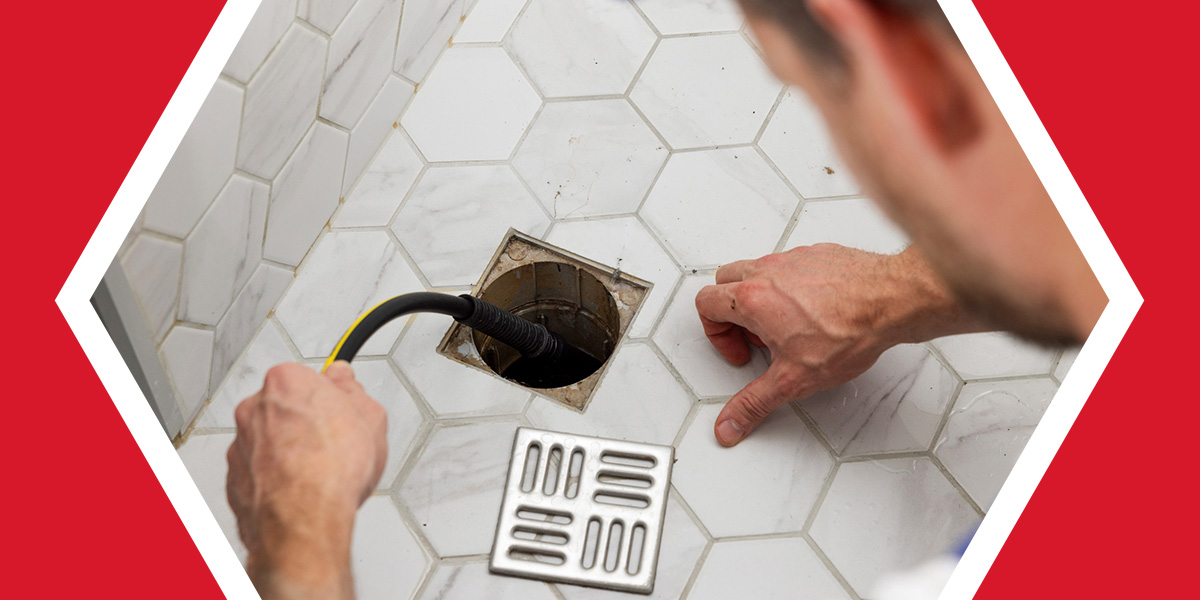
If manual removal doesn’t solve the problem, a drain snake can reach slightly deeper clogs. The safest approach is to remove the metal plate near the top of the tub, usually held in place by two screws, and feed the snake down through that opening. This route passes through the P-trap and gives you a straighter path to the clog.
Work slowly and gently to avoid damaging the pipe or pushing the clog deeper, and never force the snake if you encounter resistance. Periodically pull out the tool to remove hair or debris you’ve snagged.
While this method can clear shallow blockages, it’s not a substitute for professional drain cleaning. Repeated unsuccessful attempts can cause more harm than good.
Avoid Chemical Drain Cleaners
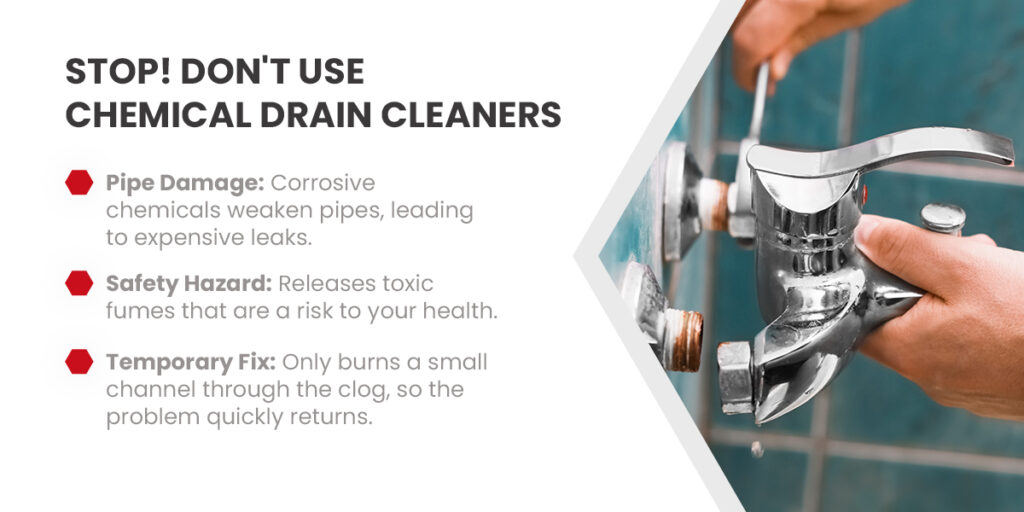
Chemical drain cleaners are relatively inexpensive and available at your local grocery or hardware store. They promise fast results but often create serious problems. Professional drain cleaning provides lasting solutions without these risks.
- Pipe damage: Lye and sulfuric acid, active ingredients in most of these products, are highly corrosive. Repeated use weakens pipe walls and can cause leaks or failure, especially in older metal pipes.
- Safety hazards: Fumes irritate lungs and eyes, and failed attempts leave toxic chemicals in your drain, creating hazardous conditions for plumbers and increasing repair costs.
- Temporary fixes: These products burn small channels through clogs while leaving most of the blockage intact, allowing your problems to return quickly.
How to Prevent Future Clogs
Preventing clogs is easier than fixing them, and a few simple habits can go a long way.
- Switch to liquid body wash: Bar soaps leave behind more residue than liquid body washes. Switching can reduce soap scum buildup over time.
- Flush drains weekly with hot water: Once a week, run hot water down your drains for a minute or two to rinse away residue before it hardens.
- Install a drain cover or hair catcher: Place quality hair catchers over your tub and shower drains. Clean them out after every few showers to stop hair from ever entering your pipes.
Signs Your Clog Needs an Expert
Clogs can still form despite diligent at-home maintenance, especially if you have hard water or older pipes.
Knowing when to stop trying DIY methods and call a professional can save you time, money and potential damage to your plumbing. It’s time for professional drain cleaning services if you notice any of the following warning signs.
- Multiple fixtures draining slowly: The clog is likely in the main line. You may need a sewer camera inspection to identify the root cause.
- Persistent sewer smells: The problem could be a blocked vent, a dry P-trap or damage farther down the line.
- Constant gurgling noises: These indicate air pressure issues in your plumbing system, often caused by a blocked vent or partial clog in the main line.
Enduric Plumbing Services provides expert drain cleaning for homeowners throughout Winston-Salem, Greensboro, High Point and Kernersville. Our licensed, bonded and insured plumbers provide up-front pricing and use advanced technology to fix the problem right the first time. Contact us today to schedule service or discuss your needs.